- Current Events The Media, the First Amendment, and President Trump
- Elections Independent Candidates in Tennessee
- Elections Darline Graham Wins South Carolina Senate Primary
- Current Events The Battle Over Mail-In Ballots
- Politics Biggs Wins Republican Nomination
- Current Events Supreme Court Settles Ongoing Water Dispute
Supreme Court Settles Ongoing Water Dispute
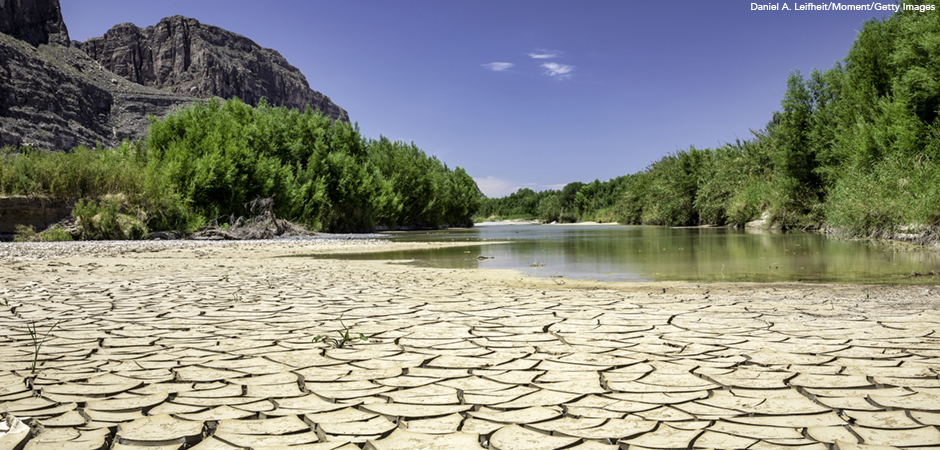
The Rio Grande River is the third longest river in the United States. The river begins in Colorado and flows into Mexico. It is a vital water resource for more than six million people on both sides of the Mexico/United States border. They depend on it for drinking water and farming. The river is the primary water source for irrigating millions of acres of cropland, especially in southern New Mexico and western Texas.
But hotter, drier weather conditions have continued to reduce water flow in the river. This has led to water disputes between the western states. The week of May 18, 2026, the U.S. Supreme Court ruled on this issue in a way that will hopefully improve water sharing and preservation in the region for years to come. Here, Election Central takes a closer look.
A Dire Situation
Today’s climate has had a serious impact on the Rio Grande River. Entire stretches of the river have gone completely dry twice in the last five years and are expected to do so again this summer. Over the past few decades, New Mexico has lost more than 70 percent of its reservoir storage along the river. To combat this loss, farmers in southern New Mexico pump out groundwater to irrigate their crops, especially chiles and pecans. Unfortunately, this has made the problem worse, as groundwater is used faster than it can be replenished. So, in 2013, the state of Texas sued the state of New Mexico. Texas claimed that New Mexico’s groundwater pumping practices upstream were making it so that not enough water was making it to the downstream Texas areas.
In the decade that followed, Texas, New Mexico, and Colorado all struggled to come up with a plan for how to share water in a fair way. There was already a water-sharing plan between the three states, but it was signed in 1939. Back then, the areas involved were sparsely populated, the need for water resources was less intense, and rainfall was more reliable. A modern plan needs to account for changes in population and climate in a way that would still ensure that enough water makes it downstream to Texas.
A Modern-Day Plan
Last week, the U.S. Supreme Court ruled in agreement with the new plan developed by the three western states. This ended thirteen years of legal disagreements between the states. Under the terms of the settlement, New Mexico must reduce its groundwater use by about 5.9 billion gallons over the next ten years. This will mean reducing groundwater use by about 5-7 percent of current amounts.
But what if there is a drought, and farmers must groundwater or let their crops die? The plan includes a detailed accounting system based on credits and debits. During the wet season, when farmers need to use less groundwater, the state earns credits that can be “cashed in” later, during the dry season. Also, the plan doesn’t specify exactly how the reduction in ground water usage should happen. It only says that the state must reduce its use overall. This means, for example, that if factories and other industries reduce their usage, less of the burden will fall on farmers.
Looking Ahead
Unfortunately, it isn’t enough just to come up with a plan that works for today. The states must consider the likelihood that population in these areas will continue to grow, while water resources will continue to shrink. With this in mind, the plan also includes a wide range of approaches to prepare for future water shortage problems, such as supporting conservation efforts, creating more efficient irrigation systems, finding new sources of water, and developing better ways to catch and store rainwater for later use. To help fund these initiatives, the state of New Mexico has already secured more than $40 million in federal funding. Nevertheless, experts fear that many small, family farmers will not be able to keep their farms open as water prices continue to rise.
Dig Deeper Last week’s Supreme Court decision has solidified a plan for how to protect and share the waters of the Rio Grande here in the United States. But millions of people in Mexico also rely on the river for drinking water and irrigation. Use Internet resources to learn more about Minute 331, an agreement about the river between the U.S. and Mexico. Write a paragraph about what you find.