- Current Events The Battle Over Mail-In Ballots
- Politics Biggs Wins Republican Nomination
- Current Events Supreme Court Settles Ongoing Water Dispute
- Democratic Party Spotlight on Keisha Lance Bottoms
- Politics Recent Supreme Court Ruling Challenges the Voting Rights Act
- Current Events King Charles Visits the U.S.
The Battle Over Mail-In Ballots
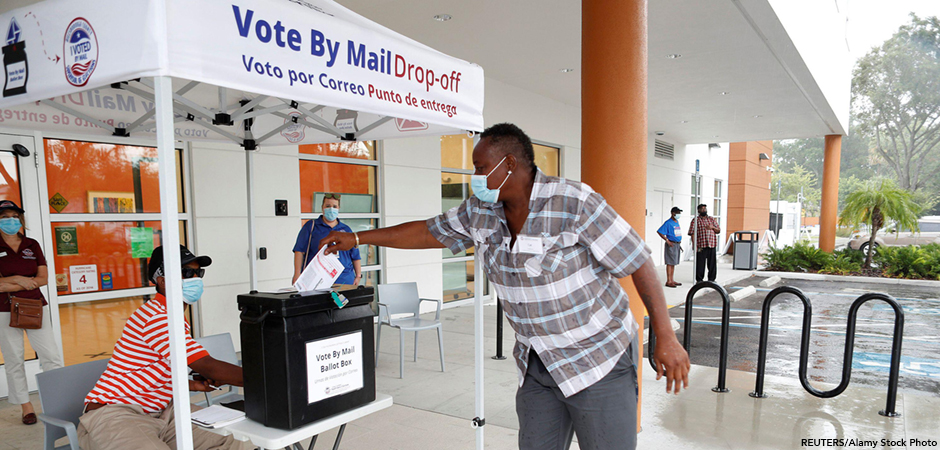
President Trump has publicly stated many times that the 2020 presidential election, which he lost to former president Joe Biden, was affected by election voting fraud. No widespread election fraud that would have influenced the election’s outcome was ever found. In March 2026, the Trump administration announced measures that would limit mail-in voting in an attempt to eliminate or reduce alleged voter fraud. In the last week of August 2026, the Supreme Court upheld the administration’s right to start putting those measures into effect.
What Does the Trump Administration Want to Do?
Mail-in ballots have always been an important criticism for the Trump administration. Trump claims that non-citizens can use mail-in ballots to impersonate registered voter citizens and cast fraudulent ballots.
People that support the option of mail-in ballots argue that they provide important flexibility for some voters. This way of casting a vote makes it possible for people who are elderly, disabled, or ill to participate in the process more easily. Those who support mail in ballots argue that it improves voter turnout and therefore helps maintain an engaged group of democratic citizens.
Trump’s March executive order limiting the use of mail in ballots stated several things. First, it proposed that the Department of Homeland Security (DHS) would be allowed to compile lists of the people who it believes are eligible to vote. Second, it would require state governments to submit lists of eligible voters to the U.S. Postal Service (USPS). The USPS would then have to include tracking barcodes on every ballot envelope that is mailed. Any state official found in violation of this order would be federally prosecuted.
The Response
The Trump administration states that all of these measures are just common-sense approaches to reducing voter fraud. The goal is to ensure that everyone who votes is actually eligible to do so. However, those opposed to the steps in this executive order argue that such efforts are unconstitutional. According to the U.S. Constitution, it is up to Congress to determine or change voting procedures, not the White House.
Changing voting mandates so close to the upcoming midterm elections in November could cause confusion and planning challenges. In some states, the process of mailing out ballots to voter households begins in just a few weeks. The limited time allowed to create Trump’s requested lists of voters could lead to mistakes. These mistakes might result in some people who are correctly registered to vote being denied their right to do so. (This is known as voter disenfranchisement.)
Opponents Respond
In response to the March executive order, a legal challenge against the administration was announced. The Supreme Court then ruled that the Trump administration could begin implementing the terms of the order. The Court clarified that they are not ruling on whether or not Trump’s actions are legal. It only allows the administration to proceed for now. Already, lower courts are beginning to challenge the order.
Dig Deeper Use Internet resources to learn more about the concept known as the “Purcell principle.” How do you think the Purcell principle applies to this case?